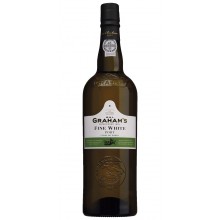
<p></p><p>Graham's was one of the first Port companies to invest in its own vineyards in Portugal’s Douro Valley in 1890 and is now at the cutting edge of innovation in winemaking techniques. This makes Graham’s a pioneer since always. <br />Today five cousins of Symington family share responsibility for every aspect of the company and personally make the Graham’s wines</p> <p></p> <p> </p> <p></p>
<p>The Symington Family owned Cockburn’s since 2006 and are responsible for all its winemaking. With the Symington family, Cockburn’s has come back under the ownership of one family. As one of the most important families in Port and the largest owners of vineyards in the Douro region, Cockburn’s could not be in better hands</p> <p></p> <p></p> <p></p>
<p></p><p>Lavradores de Feitoria (a.k.a. Feitoria) is a unique project, created on September of 2000. Resulted from the union of 15 producers, owners of 18 Quintas spread throughout the best terroirs in the 3 sub-regions of the Douro region (Baixo Corgo, Cima Corgo and Douro Superior). Nowadays the company has 48 shareholders (of which 15 are producers), and 19 Quintas. Together, they have a total area of vineyard of more than 600 ha.</p> <p>The goal of this brand has been, since the beginning, to create balanced and elegant wines that age well, having as a starting point the declared commitment with the excellence and tradition of Douro</p> <p></p> <p></p> <p></p>
<p></p><p>The story of Dow’s is unusual amongst all the great Port houses. It began in 1798 when Bruno da Silva, a Portuguese merchant from Oporto, made a journey which was the opposite to that of the first British merchants. The Port shipping business was continued by Bruno’s son, John da Silva who in 1862 brought into partnership Frederick William Cosens. With the continuing expansion of the firm, Edward da Silva and Frederick Cosens were joined by George Acheson Warre, whose well known family had been involved in the Port trade since its earliest years. In 1877, Silva & Cosens merged with another leading Port company, Dow & Co.</p> <p>Although smaller than Silva & Cosens, Dow & Co had become a very highly regarded Port producer with a particularly fine reputation for its Vintage Ports and when the two companies merged, it was decided to adopt DOW’S as the brand name</p> <p>For over two centuries the name of DOW has been associated with the finest Port from the vineyards of the Upper Douro Valley. Throughout the 20th Century and into the 21st, the Symington family has built on the legacy of the preceding Silva and Dow families.</p> <p>Dow’s attractive and distinctive drier finish is the recognisable hallmark of the wines from this great Port house</p> <p></p> <p></p>
<p>Esporao Reserva Red produced by Herdade do Espor is a wine for special occasions that combines the universal culture of wine and art, via the reproduction of original works of art on its labels.</p>
<p></p><p>The freshness and expressiveness of Adega Mayor Seleção make it perfect to accompany grilled fish, seafood, white meat and salad. Ideal presence when seating outside with friends in the afternoon.</p> <p></p> <p></p>
<p></p><p>Founded in 1854 by the descendants of the Duke of Lencastre, surrounded by cork oaks and eucalyptus trees from Australia, the Herdade da Calada is hidden between the gentle hills of the Alentejo. Throughout the years it has been the target of various interventions and improvements, but preserves the beauty and elegance of the original feature of the main building and today is one of the most modern and innovative winemaking domains in Portugal, with an enotourism unit, 35 hectares of vineyard, 110 hectares of olive grove, 60 of cereals, 215 of mount and a magnificent lodging</p>
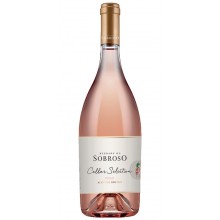
<p>The Herdade do Sobroso is part of a unique landscape, peopled with historical and heritage reminiscences, now strongly marked by the proximity of the largest artificial lake in Europe, the Alqueva Dam</p>
<p></p><p>Terrenus Veritae is a company incorporated in 2009, whose main activity developed until the present, is translated by the production and commercialization of wines. It has its headquarters located in Alegrete, a rural parish of the Council of Portalegre - Alto Alentejo / Portugal.</p>
<p>Herdade Aldeia de Cima Alyantiju Red is an outstanding Alentejo wine, predominantly made from the Alicante Bouschet grape variety. It has a deep, intense ruby colour and a rich, concentrated aroma with notes of ripe black fruit, woodland nuances and subtle hints of oak and spices. On the palate, it is robust and serious, with rich dark fruit, refined tannins and a notable minerality, culminating in a long and memorable finish that expresses the density and complexity of its terroir.</p>
<p></p><p>Susana Esteban was born in Tui, Spain. She holds a degree in Chemical Sciences from the University of Santiago de Compostela and a Master's degree in Viticulture and Oenology from the University of La Rioja. She began her trajectory as an oenologist in 1999 at Quinta do Côtto, and later worked as an oenologist at Quita do Crasto between 2002 and 2007. Both farms are located in the Douro. She has worked since the 2007 harvest as a consultant in different Alentejo producers, namely Tiago Cabaço Wines, Herdade do Barrocal, Monte dos Cabaços and Monte da Raposinha.</p>
<p></p><p><span>On the hot plains of the Baixo Alentejo, just a few kilometres from the city of Beja, is one of the oldest wine estates in the region. Its vineyards represent decades of history that Henrique Uva has preserved and farmed for many years and which he always wanted to develop as an independent producer.</span><br /><span>In 2004, he achieved his dream, with the project that goes by the name of Henrique Uva/Herdade da Mingorra. The Winery is surrounded by 1,400 hectares of a landscape that can be considered exuberant, such is the diversity of plants and fauna, with several river basins forming veritable oases. The Winery is a true place of worship. A place where modernity and functionality can be found alongside indelible traditional techniques.</span></p>




 No review at the moment