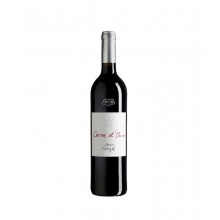
<p></p><p>Based in the Upper Douro, Castello d'Alba was the first wine that Rui Roboredo Madeira launched almost 20 years ago. Today is a landmark of the Douro region</p>
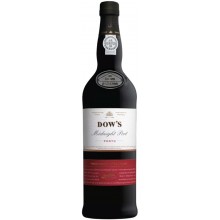
<p></p><p>The story of Dow’s is unusual amongst all the great Port houses. It began in 1798 when Bruno da Silva, a Portuguese merchant from Oporto, made a journey which was the opposite to that of the first British merchants. The Port shipping business was continued by Bruno’s son, John da Silva who in 1862 brought into partnership Frederick William Cosens. With the continuing expansion of the firm, Edward da Silva and Frederick Cosens were joined by George Acheson Warre, whose well known family had been involved in the Port trade since its earliest years. In 1877, Silva & Cosens merged with another leading Port company, Dow & Co.</p> <p>Although smaller than Silva & Cosens, Dow & Co had become a very highly regarded Port producer with a particularly fine reputation for its Vintage Ports and when the two companies merged, it was decided to adopt DOW’S as the brand name</p> <p>For over two centuries the name of DOW has been associated with the finest Port from the vineyards of the Upper Douro Valley. Throughout the 20th Century and into the 21st, the Symington family has built on the legacy of the preceding Silva and Dow families.</p> <p>Dow’s attractive and distinctive drier finish is the recognisable hallmark of the wines from this great Port house.</p> <p></p> <p></p> <p></p>
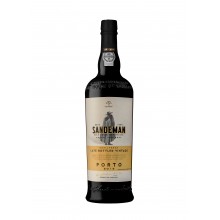
<p></p> <p>The House of Sandeman was founded in London in 1790 by George Sandeman, a young Scot from Perth who decided to invest £300 borrowed from his father in creating a business marketing wines from Porto (Portugal) and Jerez (Spain). </p> <p>Always a pioneer, Sandeman was the first company to brand its name on a cask with a hot iron. In 1805, the GSC (George Sandeman Co.) signature was a guarantee of quality for the wine it sold. It was also one of the first companies to label and advertise its wines, which in the early nineteenth century were already being exported to several countries in Europe, North and South America, Africa and Asia. </p> <p>For over two centuries, Sandeman has based its success on a rare capacity for innovation and expertise handed down from generation to generation. Currently, Sandeman clearly stands out as "the" worldwide Port Wine and Sherry brand and proudly signs: "Sandeman, Famous for Pleasure."</p>
<p></p><p>The Barão de Vilar - Vinhos, S.A. is the most recent company of Port Wine, having been constituted, in January 1996, from a stock of wines acquired by Fernando Luiz van Zeller, ceded to his two sons Fernando and Álvaro.<br />Its social denomination recovers a nobiliárquico title granted by D. Maria II of Portugal to Cristiano Nicolau Kopke, the 1st Baron of Vilar, in 1836, that, by descent, is in direct possession of the family</p>
<p></p> <p>Prats & Symington was founded in 1999 as a joint venture between the well known Bordeaux winemaker, Bruno Prats and the Symington family. It is an independent company specialising in dry red wines which has been at the forefront of the DOC Douro quality revolution and instrumental in driving forward the high quality image of the region.</p> <p></p>
<p></p><p><span>Ruby Dum by Niepoort retains its youthful, strong character, dominated by red cherries and plums with great freshness from ageing in large wooden vats in the cool cellars of Vila Nova de Gaia. Deep red, with fresh and ripe fruity aroma, easy drinking. Great with chocolate desserts or soft cheese</span></p> <p></p> <p></p>
<p></p><p>To celebrate Niepoort 170th <span>anniversary</span> was bottled 999 bottles of the "new" old VV, in which they tried to combine the concentration and richness of the original VV with the refinement and purity that increasingly characterises Niepoort wines. The base for this blend is a very fine Port from 1863, of the highest quality, exquisitely aged in casks until 1972, and then "bottled" in demijohns.</p>
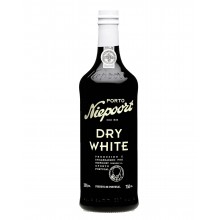
<p></p><p><span>Niepoort has been an independent family business since 1842. The Niepoort lodges are located in the historical center of Vila Nova de Gaia</span></p>
<p></p><p><span>Niepoort has been an independent family business since 1842. The Niepoort lodges are located in the historical center of Vila Nova de Gaia; a magical place where Portwines are aged in old casks, bottles or demijohns</span></p> <p></p>
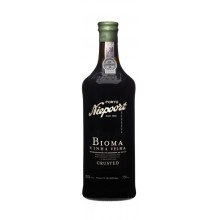
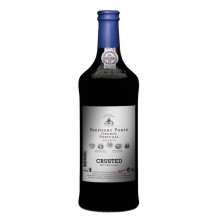
<p></p><p><span>The majority of this Crusted Port bottled in 2014 comes from the Niepoort Pisca vineyard and several vineyards in Vale de Mendiz harvested in 2011, along with a couple of small vineyard parcels from Casal de Loivos high up above Pinhão from the 2012 harvest</span></p>
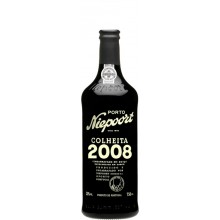
<p></p><p>Colheitas are dated Tawnies aged in small casks. The minimum age requirement is 7 years, but the tradition at Niepoort is to age several more years before bottling. The wine takes on a Tawny hue. Wood and nutty tones are evident on the palate due to the wine’s slow ageing in old casks. Colheita goes well with dry fruits desserts and the portuguese "Leite Creme queimado". As a starter, the combination with foie gras is impressive</p>
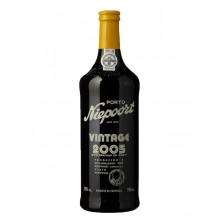
<p></p><p>Vintage Port maintains Niepoort's tradition of making balanced Ports with great concentration, being at the same time fine and delicate.</p> <p>The magic of Vintage Port is different in every phase: as a young wine it captures the youthful fruit characters. Then, after 20 years or more, the effects of the slow bottle age integration are revealed and finally, after many decades, the spirit dominates the wine. Vintage Port is amazing in all the three phases</p> <p></p> <p></p>
<p></p><p><span>Niepoort has been an independent family business since 1842. The Niepoort lodges are located in the historical center of Vila Nova de Gaia</span></p> <p></p>
Nits1841
0 review
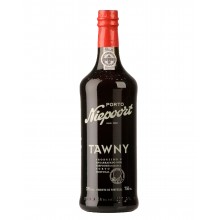
Niepoort Tawny has a shiny bright colour and soft and sweet tannin




 No review at the moment